
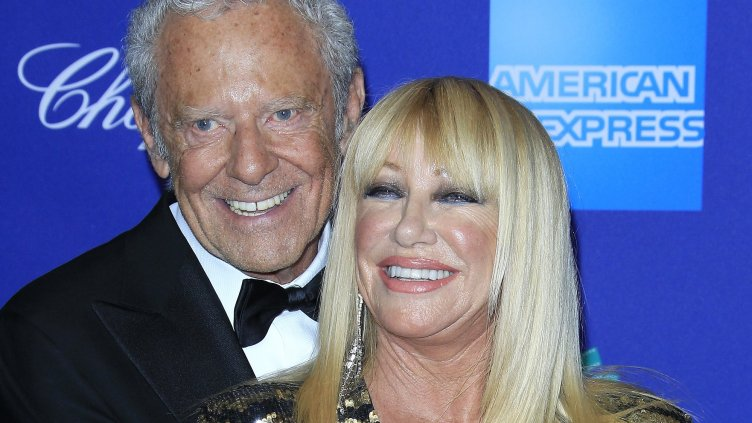
Alan Hamel is trying to keep the memory of Susan Somers alive. Two years after the passing of the unforgettable actress, who died at age 76, her husband and longtime partner is revealing in People that he is now pursuing a shared idea they had discussed for decades.
“Obviously Susan was loved not only by her family, but by millions of people around the world. One of the things we’re working on is a very interesting project — Suzanne AI Twin,” Hamel shares.
He has already presented a demo version of the artificial intelligence at a conference earlier this year and describes the result as “perfect.”
“That was Susan. I asked her several questions and she answered — us and everyone else literally left speechless. When you look at the completed version next to the real Susan, you can’t tell which is real and which is AI. And I was with Susan for 55 years — I know every feature of her face. Even for me, the difference is invisible,” he recounts.
To achieve maximum authenticity, the digital version of Somers was “trained” with all 27 of her books and hundreds of interviews.
“So it’s ready to answer all kinds of questions — the answers are already within it,” Alan says.
He explains that the idea for such a project was discussed between them as early as the 1980s during conversations with inventor and futurist Ray Kurzweil.
In related articles, the cause of Susan Somers’s death was revealed.
“We had been friends with Ray for over 30 years. Bill Gates called him the smartest person on the planet — and he was right. Even then, Ray told us about what was to come. It took decades, but we knew the day would come. And actually, the idea was Susan’s. She said: ‘We should do it. It will be interesting, but also useful for my fans and people who read my books — they want information about their health.’ I want to fulfill her wish,” Hamel continues.
His first conversation with the digital version of his wife was “a bit strange” at first, he admits, “but after two or three minutes I already forgot I was talking to artificial intelligence and got used to it immediately.”
Hamel shares that at first he worried how their family would react: “I was so relieved when they accepted the idea enthusiastically. They told me: ‘The moment will come when this won’t seem strange — it will simply be a new way to communicate with the people we loved.’”
He even proposed to the Kennedy Center Honors committee — of which he is a member — to include Susan Somers among this year’s honorees.
“They told me the awards are only for living people. I replied: ‘I know, but Suzanne AI is the future. And the future is now.’ Sadly, I couldn’t convince them — though it would have been an incredible moment — she deserved to be there,” he adds.
